


Granite is one of the most popular natural stone materials used in New Jersey homes and commercial properties. Known for its durability, unique patterns, and elegant appearance, granite is commonly found in kitchens, bathrooms, floors, and other interior surfaces.
However, even durable granite can become damaged. Dropped cookware, heavy objects, improper cleaning products, and everyday use can lead to chips, cracks, stains, and dull finishes.
Fortunately, professional granite repair in NJ can help restore many damaged stone surfaces without requiring complete replacement. Depending on the condition of the granite, repairs may involve chip filling, crack treatment, seam repairs, polishing, or specialized cleaning.
At Love Marble Stone & Restoration, we specialize in professional granite repair, restoration, and maintenance for residential and commercial properties throughout New Jersey and New York City.
In this guide, we’ll explore common granite problems, professional repair techniques, and the benefits of restoring existing granite countertops and floors.
Why Granite Surfaces in New Jersey Need Professional Repair
Granite is a hard natural stone that can withstand everyday use. However, its durability does not make it resistant to every type of damage.
For example, a heavy object dropped on a granite countertop may chip an exposed edge. Meanwhile, excessive pressure near a sink cutout can contribute to cracking, particularly when the stone lacks adequate support.
Granite flooring may also develop scratches or worn finishes from abrasive dirt and repeated foot traffic.
Although some damage is cosmetic, other problems can affect the stability or functionality of the stone.
Therefore, homeowners should consider professional granite repair when cracks, chips, loose seams, or significant surface damage appear.
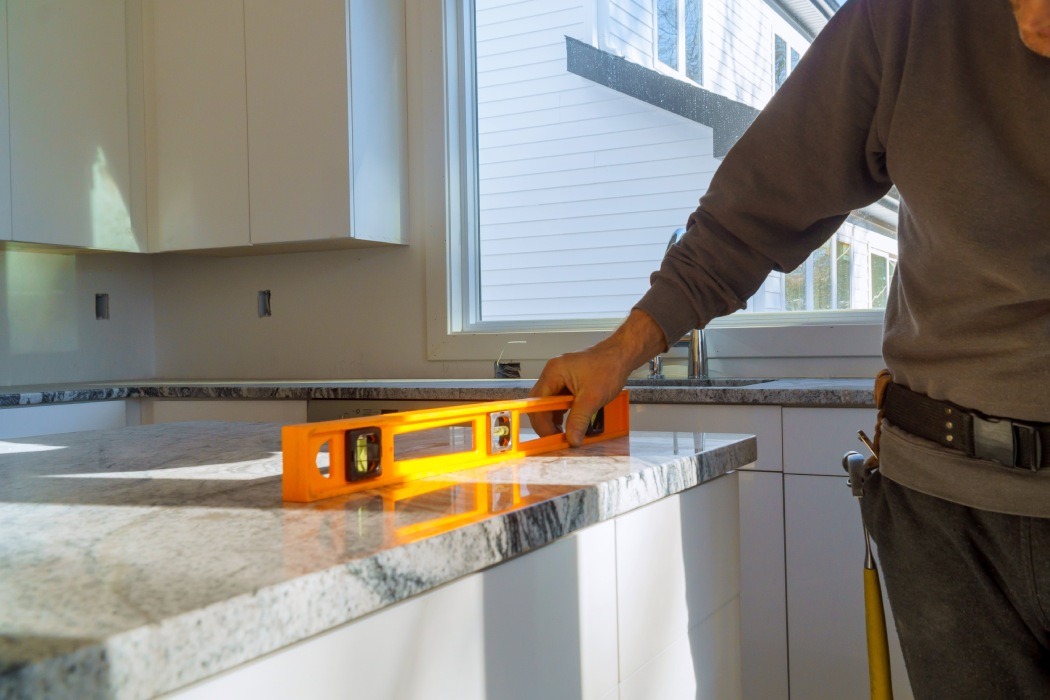
Common Granite Problems That Require Professional Repair
Granite can develop several types of damage that may require specialized attention.
However, the appropriate repair depends on the cause, location, and severity of the problem.
1. Chipped Granite Countertop Edges
Chips commonly develop along exposed countertop edges, corners, and areas surrounding sinks.
For example, accidentally striking the stone with a heavy pot may break away a small piece of granite.
Professional granite chip repair may involve cleaning the damaged area, applying a compatible repair material, and shaping the surface to blend with the surrounding stone.
However, the finished repair may remain slightly visible depending on the granite’s color, pattern, and damage.
2. Cracked Granite Countertops
Granite countertops can develop cracks near sinks, cooktops, seams, and unsupported sections.
Some cracks occur after impacts, while others may relate to movement or inadequate support.
Professional granite crack repair begins with evaluating the cause of the damage.
Depending on the condition of the stone, certain cracks may be treated using suitable repair materials.
However, significant fractures or unstable installations may require additional structural evaluation or replacement.
3. Loose or Damaged Granite Seams
Granite countertops often contain seams where separate sections of stone meet.
Over time, some seams may develop visible gaps, discoloration, or deterioration of the bonding material.
For example, an aging seam near a kitchen sink may become more noticeable because of moisture exposure or daily use.
Professional repair may involve assessing the existing joint and determining whether it can be cleaned, repaired, or re-bonded.
However, movement or inadequate support must be addressed before relying on a cosmetic repair.
4. Granite Stains and Discoloration
Granite is generally resistant to many everyday stains, but some varieties can absorb liquids.
Cooking oils, grease, and certain household products may cause discoloration.
Additionally, moisture can create darkened areas that may be mistaken for permanent stains.
Because stains have different causes, professional assessment is important before treatment begins.
5. Dull or Scratched Granite Surfaces
Granite can gradually lose its reflective appearance because of surface wear, abrasive cleaning methods, or accumulated residue.
For example, granite floors in high-traffic areas may develop fine scratches from tracked-in sand and debris.
Professional cleaning or polishing may improve certain problems, depending on the condition of the stone.
However, not every cloudy or dull area requires grinding or extensive restoration.
Why DIY Granite Repair Can Cause Additional Damage
Homeowners sometimes attempt to repair granite using store-bought adhesive kits, fillers, or polishing compounds.
While some products are intended for minor stone repairs, using the wrong materials can make the damage more noticeable.
For example, poorly matched fillers may create visible patches that contrast with the granite’s natural coloring.
Likewise, unsuitable polishing products can leave uneven finishes or residues.
Common DIY Granite Repair Mistakes
- Using adhesives that are unsuitable for natural stone
- Applying fillers without properly preparing the damaged area
- Choosing colors that do not blend with the granite
- Attempting to polish deep scratches with inappropriate products
- Using aggressive abrasives on finished stone
- Ignoring movement or inadequate countertop support
- Applying sealers without evaluating the stone’s absorbency
Additionally, treating a structural crack as a cosmetic defect may leave the underlying problem unresolved.
Therefore, professional granite repair in NJ is especially important when damage involves countertop support, seams, large cracks, or valuable stone installations.
Professional Granite Chip and Crack Repair in NJ
Chips and cracks are two of the most common reasons homeowners contact a granite repair specialist.
Although they may appear similar, these types of damage can require different treatment methods.
How Granite Chip Repair Works
Minor granite chips are often found around countertop corners, sink edges, and kitchen islands.
Professional repair typically begins with evaluating the damaged area and determining whether filling is appropriate.
Next, a compatible stone repair material may be used to rebuild the missing section.
The technician can then shape and finish the repair to improve its appearance.
However, exact color and pattern matching is not always possible because granite contains natural mineral variations.
How Granite Crack Repair Works
Crack repair requires additional consideration because some fractures affect the integrity of the stone.
For example, a crack near an unsupported sink opening may require attention to the countertop’s support system before repair.
Depending on the damage, suitable adhesives or other repair techniques may be considered.
However, repairs cannot guarantee that a fractured slab will regain its original strength.
When the stone is unstable or extensively damaged, replacement may be the safer and more practical option.
Learn more about Love Marble’s professional granite repair services in New Jersey.
Granite Stain Removal and Surface Restoration
Granite surfaces can develop discoloration even when they are maintained regularly.
For example, cooking oils may darken certain granite countertops, while cleaning product residue may leave cloudy patches.
However, the correct treatment depends on identifying the cause of the problem.
Professional Granite Stain Treatment
Some stains may respond to stone-safe cleaning products or specialized poultice treatments.
However, not every discoloration can be removed completely.
In addition, persistent dark areas may indicate moisture that requires time to dry or an underlying issue that needs attention.
Therefore, professional granite restoration should begin with an assessment rather than aggressive cleaning.
Granite Surface Refinishing
Some granite surfaces develop scratches, haze, or inconsistent finishes over time.
Depending on the material and damage, professional refinishing may improve the appearance of the surface.
However, granite is harder than marble and often requires different abrasives and polishing methods.
As a result, technicians must select treatments specifically suited to granite rather than using a standard marble restoration process.
Granite Polishing: Restoring Shine and Natural Beauty
Polished granite is valued for its reflective appearance and distinctive natural patterns.
However, everyday wear and improper maintenance can affect its finish.
For example, granite flooring may develop dull traffic patterns from abrasive dirt, while kitchen countertops can accumulate residues that reduce their shine.
Professional polishing may improve suitable surface wear and restore a more consistent finish.
However, the appropriate treatment depends on whether the issue involves residue, scratches, coatings, or damage to the stone itself.
At Love Marble Stone & Restoration, our granite restoration and maintenance services include stone cleaning, honing, polishing, grinding, and other appropriate treatments.
Each surface is evaluated to determine the restoration approach that best matches its condition and desired appearance.
How Granite Repair May Help Prevent More Extensive Damage
Small granite chips and cracks do not always lead to larger problems. However, some defects can worsen when the underlying cause remains unresolved.
For example, a crack near an unsupported countertop section may continue to experience stress during everyday use.
Likewise, a deteriorating seam may require attention before separation becomes more extensive.
Professional repair can help address certain problems before they become more difficult to manage.
Why Early Assessment Matters
Having damaged granite evaluated early provides several advantages.
- Identifies whether damage is cosmetic or potentially structural
- Helps determine whether repair is practical
- Allows technicians to select suitable repair materials
- May reduce the need for more extensive work in suitable cases
- Helps homeowners understand expected repair results
- Provides guidance on maintenance after treatment
However, early repair does not guarantee that replacement will never be necessary.
The outcome depends on the existing stone, the cause of the damage, and the effectiveness of the proposed treatment.
Granite Countertop Repair for Kitchens and Bathrooms
Granite countertops are commonly found in kitchens and bathrooms throughout New Jersey.
Because these surfaces are used frequently, chips, cracks, stains, and other imperfections can develop over time.
Kitchen Granite Countertop Repair
Kitchens often contain granite countertops, islands, and surrounding stone surfaces.
Common problems include chipped edges, cracks near sink cutouts, damaged seams, and stains from cooking oils.
For example, a granite island may develop a chipped corner after being struck by cookware.
Professional repair may improve the appearance of the damaged area while preserving the existing stone.
However, significant cracks should be evaluated for possible support or installation problems.
Bathroom Granite Repair
Bathroom granite surfaces may develop discoloration, cleaning residue, small chips, or damaged seams.
Additionally, persistent moisture can affect surrounding installation materials.
Professional cleaning and repair may improve suitable surface problems.
However, active leaks and underlying moisture issues must be corrected separately.
Granite Sealing: Is It Necessary After Repair?
Granite sealing is an important topic, but not every granite surface requires the same treatment.
Some granite varieties are relatively dense and absorb very little liquid. Others may benefit from a suitable penetrating sealer.
Therefore, sealing should be based on the stone’s characteristics rather than automatically applied after every repair.
What Granite Sealing Can Do
When appropriate, a compatible penetrating sealer may help:
- Reduce absorption of certain liquids
- Improve resistance to some stains
- Support routine stone maintenance
- Provide additional protection for suitable absorbent surfaces
However, sealing does not make granite completely waterproof, scratch-proof, or resistant to structural damage.
In addition, sealing is not a substitute for cleaning spills promptly.
Homeowners should ask a stone care professional whether sealing is appropriate for their specific granite surface.
Granite Repair vs. Granite Replacement: Which Is Better?
When granite becomes damaged, homeowners often wonder whether repairing or replacing the existing stone makes more sense.
Fortunately, some chips, cracks, stains, and worn finishes may be improved through professional repair or restoration.
However, extensive fractures and unstable stone may require replacement.
| Consideration | Granite Repair | Granite Replacement |
|---|---|---|
| Best For | Minor chips, suitable cracks, stains, and surface wear | Extensive breakage or irreparable damage |
| Existing Stone | Preserves the original granite | Replaces damaged material |
| Cost | May be lower for suitable repairs | Includes new stone and installation work |
| Appearance | Repair may remain slightly visible | Replacement material may differ in pattern or color |
| Disruption | May avoid countertop removal | May require removal and installation |
| Structural Concerns | Some problems require separate support repairs | May be necessary when the stone cannot be safely repaired |
For example, a small countertop edge chip may be suitable for repair.
However, a large fracture through an unstable slab may require more extensive work.
Therefore, professional inspection is the best starting point before deciding on replacement.
How Much Does Granite Repair Cost in New Jersey?
The cost of granite repair in NJ varies depending on the type of damage, stone characteristics, repair method, and accessibility.
For example, repairing a minor countertop chip involves a different scope of work than treating a long crack or restoring a large granite floor.
Factors That Affect Granite Repair Pricing
| Cost Factor | How It Affects the Project |
|---|---|
| Type of Damage | Chips, cracks, seam problems, and stains require different treatments |
| Damage Severity | Larger or deeper defects may need additional work |
| Repair Location | Edges, corners, sinks, and hard-to-reach areas can affect complexity |
| Granite Color and Pattern | Natural variations can affect repair matching and finishing |
| Surface Area | Larger restoration projects may require more labor and equipment |
| Additional Treatments | Cleaning, polishing, and suitable sealing may affect total costs |
| Underlying Problems | Movement, support issues, or moisture may require separate repairs |
Because granite repair projects vary, a written estimate based on the actual damage is more useful than a generic price range.
Before approving work, ask the contractor to explain the proposed repair and any limitations.
Granite Repair for Homes Throughout New Jersey
Granite countertops, floors, and decorative stone surfaces are common in residential properties across New Jersey.
For example, homeowners in Springfield, Summit, Short Hills, Westfield, Montclair, Princeton, and surrounding communities may need professional granite chip repair, crack treatment, cleaning, or polishing.
Although granite is durable, everyday activities can eventually affect exposed edges, countertop seams, and heavily used surfaces.
Professional granite repair services in NJ can help homeowners evaluate their existing stone and determine whether restoration is appropriate.
At Love Marble Stone & Restoration, we serve residential and commercial properties throughout New Jersey and New York City.
Granite Repair in NYC Apartments and Commercial Properties
Granite is also found in New York City apartments, condominiums, offices, and other commercial spaces.
For example, kitchen countertops in Manhattan apartments may develop chips near sinks and exposed corners.
Meanwhile, granite flooring in commercial entrances may show scratches or wear from frequent foot traffic.
Professional repair and restoration can help improve suitable damage without automatically replacing the existing stone.

However, repairs should be planned around the stone’s condition, building access, and any underlying installation problems.
Love Marble provides professional granite repair and natural stone restoration services throughout NJ and NYC.
Can Granite Repair Improve Your Property’s Appearance?
Well-maintained granite can contribute to an attractive appearance in kitchens, bathrooms, and other interior spaces.
For example, repairing a chipped countertop edge may help improve the overall presentation of a kitchen.
Likewise, polishing suitable worn granite surfaces can help restore their desired finish.
However, granite repair does not guarantee an increase in property value or a particular resale outcome.
Instead, repair should be viewed as a practical way to improve the condition and appearance of existing natural stone.
How to Maintain Granite After Professional Repair
Once granite has been repaired or restored, proper maintenance can help preserve its appearance.
Fortunately, several everyday practices can reduce unnecessary wear.
Recommended Granite Maintenance Tips
- Use cleaning products suitable for natural granite.
- Avoid abrasive scrubbers and harsh cleaning powders.
- Wipe up spills promptly, particularly oils and strongly colored liquids.
- Use cutting boards rather than cutting directly on countertops.
- Place hot cookware on suitable trivets or protective mats.
- Avoid striking exposed countertop edges with heavy objects.
- Do not sit or stand on granite countertops.
- Investigate cracks or loose seams when they appear.
- Ask a stone specialist whether sealing is necessary.
- Follow care instructions provided after professional repair.
In addition, avoid using aggressive DIY polishing products without confirming that they are suitable for the granite’s finish.
Proper maintenance helps reduce unnecessary damage and may limit the need for additional repairs.
Frequently Asked Questions About Granite Repair in NJ
Can a Chipped Granite Countertop Be Repaired?
Yes. Many minor granite countertop chips can be repaired using compatible stone repair materials.
However, the finished repair may remain visible depending on the stone’s pattern and the extent of damage.
Can a Cracked Granite Countertop Be Fixed?
Some granite cracks may be repairable.
However, extensive fractures, unstable stone, or inadequate support may require more extensive work or replacement.
How Much Does Granite Repair Cost in New Jersey?
Granite repair costs vary depending on the damage, location, materials, and techniques required.
A professional assessment provides the best basis for a written estimate.
Can Granite Stains Be Removed?
Some granite stains can be treated using suitable cleaning products or specialized poultices.
However, not every stain can be removed completely.
Can Dull Granite Be Polished Again?
Many dull granite surfaces can be improved through professional cleaning or polishing.
However, the appropriate treatment depends on the cause of the dullness and the existing finish.
Does Granite Need to Be Sealed After Repair?
Not always. Some granite varieties are dense and may not require sealing.
Others may benefit from a compatible penetrating sealer that improves resistance to certain stains.
Is Granite Repair Better Than Replacement?
Repair may be the better option for suitable chips, localized cracks, stains, and surface damage.
However, severely fractured or unstable granite may need replacement.
How Long Does Granite Repair Take?
Project duration depends on the type of damage, repair materials, accessibility, and any required curing time.
A professional assessment can help establish a realistic schedule.
Choose Love Marble Stone & Restoration for Granite Repair in NJ
Granite is a durable natural stone, but chips, cracks, stains, and worn finishes can gradually affect its appearance and functionality.
Fortunately, professional granite repair in NJ can help restore many damaged surfaces without automatically requiring replacement.
At Love Marble Stone & Restoration, we specialize in granite repair, restoration, and maintenance for residential and commercial properties throughout New Jersey and New York City.
Whether your granite countertop has developed a chipped edge, your kitchen island has a visible crack, or your granite flooring has become dull, our team can evaluate the condition of your existing stone and recommend suitable repair or restoration options.
Learn more about our granite repair services and granite restoration and maintenance.
Ready to improve your granite surfaces? Contact Love Marble Stone & Restoration today to request a consultation for professional granite repair in New Jersey.