

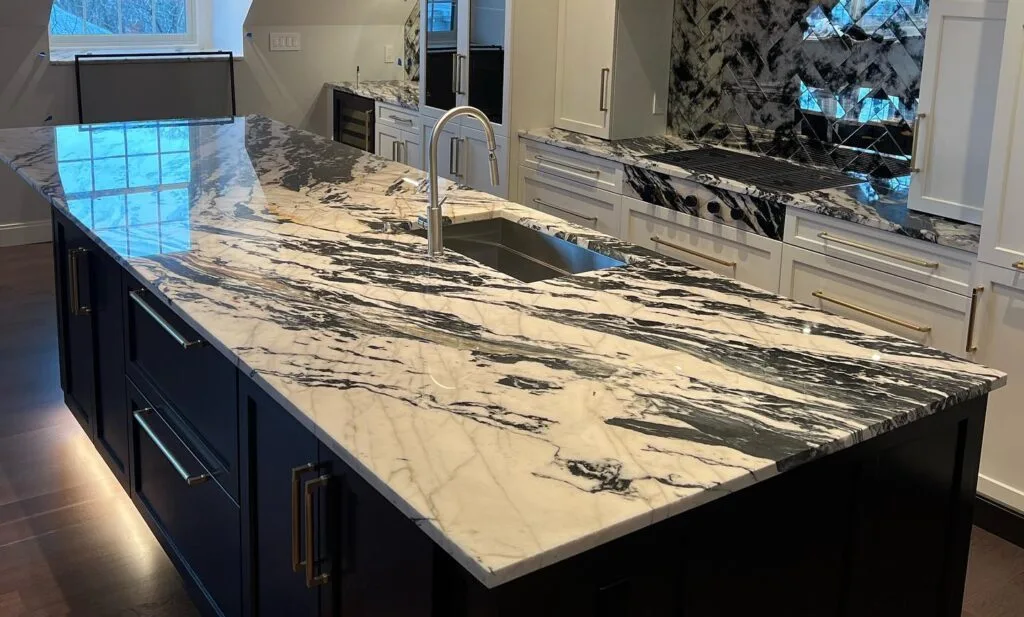
How To Clean Granite Countertops: A Complete Guide to Keeping Granite Beautiful
If you are wondering how to clean granite countertops, you are in the right place. Read our granite cleaning tips for streak-free granite care or contact Love Marble Stone & Restoration for all of your marble and natural stone care needs.
Tips For Streak-Free Granite Cleaning
Granite countertops are a popular choice for kitchens and bathrooms because of their natural beauty, durability, and timeless appearance. However, even though granite is a strong natural stone, it requires proper care to maintain its shine and prevent stains, discoloration, and surface buildup.
Knowing how to clean granite countertops correctly can help preserve their appearance and extend their lifespan. Using the wrong cleaning products or techniques may gradually damage the countertop’s finish or protective sealer.
Whether you have granite countertops in your kitchen, bathroom, or commercial space, regular granite restoration and maintenance is essential. At times, granite repairs may also be necessary if the stone becomes damaged.
At Love Marble Stone & Restoration, we specialize in professional marble and natural stone cleaning, polishing, and restoration services throughout New Jersey. In this guide, we’ll explain the best ways to clean granite countertops, which products to avoid, and when professional granite cleaning may be beneficial.
1. Use Warm Water and Mild Dish Soap for Daily Cleaning
One of the simplest and safest ways to clean granite countertops is with warm water and a small amount of mild dish soap.
For everyday cleaning, you do not need expensive or harsh cleaning solutions. A gentle cleaning routine can effectively remove food particles, dust, fingerprints, and everyday residue.
Follow these steps:
- Remove appliances, utensils, and other objects from the countertop.
- Mix warm water with a few drops of mild dish soap.
- Dampen a soft microfiber cloth with the cleaning solution.
- Gently wipe the entire granite surface.
- Rinse with a clean, damp cloth to remove soap residue.
- Dry the countertop using a soft microfiber towel.
Avoid leaving soapy water on the surface because residue can create a dull or streaky appearance.
Drying the countertop after cleaning also helps prevent mineral deposits and water spots.
2. Choose a pH-Neutral Granite Cleaner
Although mild dish soap works well for everyday maintenance, homeowners may prefer using a cleaning product specifically formulated for natural stone.
A pH-neutral granite cleaner is designed to remove dirt and surface residue without exposing the stone to unnecessarily harsh chemicals.
When choosing a granite countertop cleaner, look for products labeled safe for natural stone and compatible with sealed granite.
Avoid cleaners containing acidic ingredients or strong alkaline chemicals unless specifically approved for your countertop.
Professional-grade stone cleaners can be particularly helpful for countertops that experience frequent cooking, food preparation, or heavy daily use.
Always follow the manufacturer’s instructions and test unfamiliar products on a small, inconspicuous area.
3. Avoid Vinegar, Lemon Juice, and Harsh Cleaning Chemicals
One of the biggest mistakes homeowners make when cleaning granite countertops is using products that are inappropriate for natural stone.
Although vinegar and lemon juice are commonly recommended for household cleaning, acidic substances are not ideal for routine granite maintenance.
Granite is generally more resistant to acids than marble, but acidic cleaners may affect certain mineral components, surface treatments, or protective sealers.
Cleaning products to avoid include:
- White vinegar
- Lemon juice
- Acidic bathroom cleaners
- Harsh degreasers
- Abrasive cleaning powders
- Steel wool and rough scrubbing pads
- Unapproved bleach or ammonia solutions
Repeated exposure to inappropriate cleaning products can contribute to surface deterioration, sealer damage, or changes in appearance.
Using a gentle, stone-safe cleaner is generally the best approach for protecting granite countertops.
4. Clean Granite Countertop Spills Immediately
Granite is a relatively durable stone, but many varieties contain microscopic pores that can absorb liquids if the surface is not adequately sealed.
Certain substances may leave stains when allowed to remain on the countertop.
Common staining substances include:
- Cooking oils and grease
- Coffee and tea
- Red wine
- Fruit juices
- Sauces and food coloring
- Cosmetic products
- Certain cleaning chemicals
When a spill occurs, blot the liquid immediately using a clean cloth or paper towel.
Avoid spreading the substance across the countertop.
After removing the spill, clean the affected area with a mild, pH-neutral solution and dry thoroughly.
Prompt cleanup is especially important around sinks, cooking areas, and bathroom vanities where moisture and household products are frequently present.
5. Remove Grease and Food Residue Safely
Kitchen granite countertops often develop greasy buildup from cooking oils, food preparation, and everyday use.
Over time, this residue may make the countertop appear cloudy or less reflective.
To remove light grease buildup, begin with warm water and mild dish soap.
Use a soft microfiber cloth to gently loosen the residue without scratching the surface.
For stubborn buildup, select a stone-safe degreasing product specifically approved for granite.
Avoid aggressive scrubbing or applying highly concentrated chemicals.
If the countertop continues to appear dull or greasy after regular cleaning, professional granite cleaning may be necessary to remove accumulated residue more thoroughly.
6. How to Remove Water Spots From Granite Countertops
Water spots frequently develop around kitchen sinks, bathroom faucets, and other areas exposed to moisture.
These spots may result from mineral deposits left behind when water evaporates.
Hard water deposits can gradually accumulate, creating a cloudy or uneven appearance.
To minimize water spots, wipe wet areas promptly and dry the surface with a microfiber towel.
For existing deposits, use a granite-safe cleaner designed to address mineral buildup.
Avoid acidic descalers commonly used on other household surfaces unless they are specifically approved for the stone.
Stubborn mineral deposits may require professional cleaning techniques to remove them safely without affecting the countertop’s finish.
7. Keep Granite Countertops Properly Sealed
Sealing is an important part of maintaining many granite countertops.
A penetrating stone sealer helps reduce the absorption of liquids and makes certain stains easier to prevent.
However, not every granite surface requires the same sealing schedule.
The need for sealing depends on the stone’s porosity, existing treatment, usage, and overall condition.
Some granite countertops may benefit from periodic resealing, while denser materials may require less frequent treatment.
A professional natural stone specialist can evaluate whether your countertops need resealing.
It is important to understand that sealing does not make granite completely stain-proof or eliminate the need for regular cleaning.
8. How Often Should You Clean Granite Countertops?
Granite countertops should receive regular cleaning to prevent dirt, grease, and residue from accumulating.
A practical maintenance schedule includes:
- Daily Cleaning: Wipe countertops using a soft microfiber cloth and a mild, stone-safe cleaning solution.
- Weekly Cleaning: Thoroughly clean the countertop, paying special attention to areas surrounding sinks, appliances, and food preparation spaces.
- Periodic Maintenance: Check for persistent stains, mineral buildup, dull areas, or signs that the stone may need additional treatment.
- Professional Cleaning: Consider professional granite cleaning when ordinary household cleaning no longer restores the countertop’s desired appearance.
The appropriate cleaning frequency depends on how heavily the countertops are used and the environmental conditions surrounding the stone.
9. Common Mistakes to Avoid When Cleaning Granite
Even durable granite countertops can develop problems when improperly maintained.
Common mistakes include using abrasive scrubbers, allowing spills to remain on the surface, applying inappropriate cleaning chemicals, and neglecting existing moisture problems.
Homeowners should also avoid assuming that all natural stones require identical cleaning methods.
Granite, marble, quartzite, and other stone materials have different characteristics and maintenance requirements.
Another mistake is attempting aggressive stain removal without identifying the source of the discoloration.
Improper treatment may spread the stain or create additional surface problems.
When standard cleaning methods are unsuccessful, consulting a natural stone professional is often the safest option.
10. When Should You Consider Professional Granite Cleaning?
Regular household cleaning is effective for everyday maintenance, but it cannot always remove deeply embedded dirt, stubborn residue, or certain stains.
Over time, granite countertops may lose some of their original shine because of accumulated buildup, surface wear, or deteriorating treatments.
Professional granite cleaning services use specialized equipment and stone-appropriate products to address problems that ordinary household cleaners may not resolve.
Depending on the countertop’s condition, professional services may include:
- Deep cleaning of granite surfaces
- Removal of accumulated dirt and residue
- Professional granite polishing
- Evaluation of existing sealers
- Application of suitable protective treatments
- Maintenance recommendations for long-term care
Professional assessment can help determine whether cleaning alone is sufficient or whether polishing or other restoration services would provide better results.
When routine care is no longer enough, our professional granite cleaning NJ services can help remove stubborn buildup and refresh granite countertops, floors, and other natural stone surfaces. Love Marble Stone & Restoration can evaluate whether your granite needs deep cleaning, polishing, or additional restoration.
Professional Granite Countertop Cleaning in New Jersey
Maintaining granite countertops requires consistent care, appropriate cleaning products, and an understanding of how natural stone responds to everyday use.
While regular cleaning helps preserve the appearance of granite, professional maintenance can provide a more thorough solution when surfaces become dull, stained, or difficult to clean.
At Love Marble Stone & Restoration, we provide professional granite cleaning, polishing, and natural stone restoration services for residential and commercial properties throughout New Jersey.
Our experienced team understands the unique characteristics of natural stone and uses appropriate cleaning methods to help restore and maintain its appearance.
Whether your granite countertops need deep cleaning, professional polishing, or periodic stone maintenance, we can help you determine the most suitable service.
Contact Love Marble Stone & Restoration today to schedule professional granite countertop cleaning in New Jersey and help keep your natural stone surfaces looking beautiful for years to come.