


Caring for Your Marble Flooring: Cleaning, Maintenance & Protection Tips
Marble flooring has always symbolized luxury, refinement, and timeless elegance. Whether featured in grand entryways, living rooms, kitchens, bathrooms, or commercial lobbies, marble instantly elevates the appearance of a property. Its distinctive veining, natural colors, and reflective finish create an atmosphere of sophistication that few materials can match.
However, maintaining that beauty requires proper marble floor care. Marble is a natural stone that can develop scratches, stains, etching, and dull spots when exposed to abrasive debris, acidic cleaning products, and everyday wear. Understanding how to clean marble floors correctly is essential for preserving their appearance and preventing unnecessary damage.
In this guide, we’ll explore everything you need to know about caring for marble flooring, from daily cleaning routines and safe products to stain prevention, sealing, seasonal maintenance, and professional restoration.
With proper maintenance and help from experienced marble restoration specialists at Love Marble Stone & Restoration, homeowners and commercial property managers throughout New Jersey and New York City can keep their marble floors looking beautiful for years.
Why Marble Flooring Requires Special Care
Marble is strong, durable, and long-lasting, but its natural mineral composition makes it sensitive to certain substances and cleaning methods. Unlike ceramic tile or many engineered flooring materials, marble contains calcium carbonate, which reacts with acids.
Everyday substances such as vinegar, lemon juice, wine, and certain household cleaners can cause etching. These chemical reactions create dull spots that are particularly noticeable on polished marble floors.
Marble can also absorb liquids, depending on its density, finish, and existing protection. Oils, colored beverages, and other contaminants may penetrate the surface and leave stains. Meanwhile, dirt and grit trapped beneath shoes can gradually create fine scratches that diminish the floor’s reflective finish.
The Natural Stone Institute’s stone care guidelines recommend appropriate cleaning products and caution against acidic cleaners and abrasive materials that can damage natural stone.
These characteristics don’t make marble unsuitable for flooring. They simply mean that proper cleaning, preventative maintenance, and periodic professional care are essential.
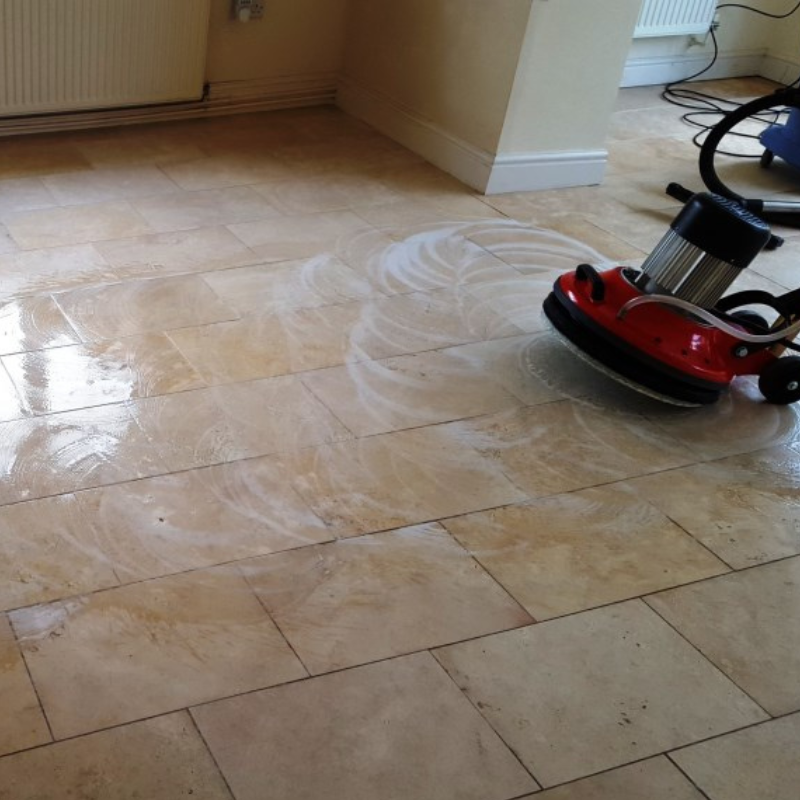
Daily Marble Floor Care: Simple Habits That Prevent Damage
Daily maintenance is the foundation of effective marble floor care. Small cleaning habits can help prevent scratches, minimize staining, and preserve the floor’s natural shine.
Marble floors, especially in busy households and commercial properties, collect dust, dirt, sand, and other abrasive particles. When these materials remain on the surface, normal foot traffic can gradually produce micro-scratches that make polished marble appear dull.
Dust Mop Your Marble Floors Regularly
Use a clean, soft microfiber dust mop to remove loose debris. In high-traffic areas, daily dust mopping is recommended. Lower-traffic spaces may require less frequent cleaning.
Avoid stiff-bristled brushes or rough cleaning pads that could scratch the stone. If using a vacuum, choose a model with a suitable hard-floor attachment and avoid dragging abrasive wheels or attachments across the marble.
Clean Spills Immediately
Spills should be cleaned promptly, particularly when they involve acidic liquids or substances that may cause staining.
Blot liquid spills using a clean, absorbent cloth rather than spreading them across the surface. Follow with a suitable marble-safe cleaning solution when necessary.
Keep Entryways Free of Dirt and Grit
Placing appropriate mats near entrances helps prevent sand, road salt, and outdoor debris from reaching marble flooring. Regularly clean beneath mats to prevent trapped particles from scratching the surface.
These simple precautions support long-term marble floor maintenance and help preserve the stone’s appearance between professional treatments.
Choosing Safe Cleaning Products for Marble Floors
One of the most important aspects of caring for marble flooring is choosing the correct cleaning products. Many common household cleaners contain ingredients that can damage marble’s finish or cause chemical etching.
For routine maintenance, select products specifically formulated for natural stone.
Cleaning Products That Are Safe for Marble
- pH-neutral cleaners labeled for marble or natural stone
- Manufacturer-approved marble floor cleaning solutions
- Soft microfiber mops and nonabrasive cleaning cloths
- Clean water for light maintenance when appropriate
- Mild cleaning solutions specifically approved for the stone’s finish
When damp mopping, avoid oversaturating the floor. Follow product instructions, change dirty mop water regularly, and remove cleaning residue as needed.
Cleaning Products to Avoid on Marble Floors
- Vinegar and acidic cleaning solutions
- Lemon juice and citrus-based cleaners
- Bathroom and toilet bowl cleaners
- Abrasive powders and scouring creams
- Harsh chemical cleaners not approved for marble
- Steel wool and abrasive scrubbing pads
- Unapproved bleach or ammonia solutions
Acidic products can chemically etch marble, while abrasive cleaners may scratch or dull its finish. Using the wrong cleaning products repeatedly can result in damage that requires professional treatment.
For additional information about proper cleaning methods, the Natural Stone Institute’s care and cleaning video provides practical guidance for maintaining natural stone surfaces.
How to Prevent Scratches and Surface Wear on Marble Flooring
Preventing scratches is easier than repairing them after they appear. Although marble is durable enough for many residential and commercial flooring applications, its polished surface can be damaged by friction, abrasive particles, and furniture movement.
To reduce scratching and everyday wear:
- Place entrance mats in high-traffic areas.
- Use felt pads or suitable protective glides beneath furniture legs.
- Lift heavy furniture instead of dragging it across marble.
- Clean up sand, dirt, and grit promptly.
- Avoid abrasive cleaning equipment.
- Use rugs in frequently traveled areas when appropriate.
- Inspect furniture pads regularly for trapped debris.
In homes with marble floors, encouraging family members to remove outdoor shoes can also reduce the amount of abrasive debris tracked indoors.
If scratches have already developed, professional marble refinishing can help restore a smoother, more uniform finish. The appropriate treatment depends on the depth of the scratches and the condition of the stone.
Managing Spills, Stains, and Etching on Marble Floors
Spills are unavoidable, but knowing how to handle them can make a significant difference in maintaining marble flooring. Because some marble surfaces absorb liquids, quick action helps reduce the likelihood of staining.
How to Clean Spills on Marble Floors
When a spill occurs, blot the affected area using a clean cloth or paper towel. Avoid aggressively rubbing the surface, especially if the spill contains dirt or abrasive particles.
For general residue, use a marble-safe cleaner according to the manufacturer’s instructions.
Oil-based stains, organic stains, and mineral discoloration may require different treatment methods. Attempting to remove stubborn stains with household chemicals can make the problem worse.
Understanding Marble Stains vs. Etching
Marble staining and etching are two different problems.
A stain occurs when a substance penetrates the stone and causes discoloration. Oil, coffee, wine, and other liquids may cause staining, depending on the stone’s absorbency and the length of exposure.
Etching occurs when acidic substances react with the marble’s calcium carbonate composition. This reaction changes the stone’s surface and often produces a dull or chalky-looking mark.
Unlike some stains, etching cannot be removed through ordinary cleaning. Depending on its severity, professional honing or polishing may be necessary to restore the affected finish.
The National Park Service’s preservation guidance emphasizes evaluating stone conditions and selecting appropriate, minimally damaging cleaning treatments, particularly for historic masonry and natural stone.
The Role of Marble Floor Sealing in Long-Term Protection
Sealing can be an important part of marble flooring care, particularly for absorbent stone exposed to moisture, spills, and frequent use.
Professional marble sealing generally involves applying a compatible penetrating sealer designed to reduce liquid absorption and improve stain resistance.
However, sealing does not make marble completely stain-proof or waterproof. It also does not prevent scratches, ordinary surface wear, or etching caused by acidic substances.
How Often Should Marble Floors Be Sealed?
There is no universal schedule for resealing marble flooring. The appropriate frequency depends on several factors:
- The marble’s density and absorbency
- The type and quality of sealer previously applied
- The amount of foot traffic
- Exposure to moisture and spills
- Cleaning products and maintenance practices
- The manufacturer’s recommendations
Some floors may require periodic resealing, while others can maintain adequate protection for longer periods. A professional assessment can help determine whether additional treatment is necessary.
It’s also important to understand that most penetrating sealers are designed to maintain the stone’s natural appearance rather than create a glossy coating. The shine of polished marble primarily comes from the stone’s surface finish, not from the sealer itself.
Seasonal Marble Floor Care Tips for New Jersey and NYC
Seasonal changes can affect marble flooring, especially in areas such as New Jersey and New York City, where winters bring snow, road salt, and outdoor debris, while warmer months may introduce higher humidity and increased foot traffic.
Winter Marble Floor Maintenance
Winter weather creates additional challenges for marble floors located near entrances.
- Use entrance mats to capture snow, dirt, and road salt.
- Remove tracked-in moisture promptly.
- Clean salt residue with a suitable natural stone cleaner.
- Inspect floors for new scratches and surface dullness.
- Replace saturated or dirty mats as needed.
Road salt and abrasive debris can damage polished finishes when repeatedly tracked across marble flooring.
Summer Marble Floor Maintenance
During warmer months, moisture, humidity, and increased household activity can create additional cleaning demands.
- Maintain appropriate indoor ventilation.
- Clean moisture and spills promptly.
- Inspect areas around entrances and bathrooms.
- Continue regular dust mopping and damp cleaning.
If persistent dark spots or moisture problems develop, have the underlying cause evaluated rather than assuming resealing will resolve the issue.
Spring and Fall Marble Maintenance
Seasonal transitions provide a good opportunity to inspect marble floors and address maintenance needs.
- Perform a more thorough cleaning using approved products.
- Inspect high-traffic areas for scratches and dullness.
- Check grout lines and joints for deterioration.
- Evaluate whether professional polishing or sealing is needed.
- Replace worn furniture pads and entryway mats.
Following a seasonal maintenance routine helps prevent minor problems from developing into more extensive restoration needs.
How Professional Marble Polishing Restores Floor Shine
Even with careful maintenance, marble floors can gradually lose their original shine. Foot traffic, abrasive debris, spills, and everyday wear may create fine scratches and uneven reflective areas.
Professional marble polishing helps restore the natural reflective finish of the stone. Unlike ordinary cleaning, polishing uses specialized equipment and abrasives to refine the marble’s surface.
Depending on the floor’s condition, restoration specialists may begin with honing to address deeper scratches or etching. Progressive polishing then refines the surface to achieve the desired finish.
The process can improve the appearance of worn marble floors and help restore consistency across heavily traveled areas.
Professional polishing does not make marble immune to future scratches or stains. Continued routine maintenance remains essential after restoration.
When Should You Consider Professional Marble Floor Restoration?
Routine cleaning is important, but certain problems require more specialized treatments. If marble flooring develops significant damage, ordinary household cleaning products may not be sufficient.
Signs that professional restoration may be necessary include:
- Persistent dullness that does not improve after cleaning
- Visible scratches or worn traffic patterns
- Etching caused by acidic substances
- Stubborn stains or discoloration
- Uneven surface finishes
- Minor chips or damaged edges
- Older marble floors that have lost their original appearance
Professional marble restoration in New Jersey may involve deep cleaning, honing, grinding, polishing, surface repairs, and sealing, depending on the condition of the stone.
Addressing these problems early can help preserve existing marble flooring and may reduce the need for costly replacement.
Why Long-Term Marble Care Benefits From Professional Maintenance
Marble flooring is a long-term investment that benefits from consistent care. While daily cleaning and preventative habits are essential, professional stone maintenance can address issues that ordinary cleaning cannot resolve.
Experienced marble restoration specialists evaluate the stone’s condition, identify potential problems, and recommend suitable treatments based on the floor’s finish, traffic level, and exposure to moisture or contaminants.
Professional services may include deep cleaning, honing, polishing, stain treatment, sealing, and minor surface repairs.
Regular assessments are particularly beneficial for expansive marble floors in commercial buildings, hotels, apartment lobbies, and other properties that experience heavy use.
Marble Flooring Care in New Jersey
New Jersey homes often feature marble flooring in kitchens, bathrooms, hallways, foyers, and luxury living spaces. Commercial properties also rely on marble to create attractive entrances, reception areas, and common spaces.
With changing seasonal conditions, marble floors throughout New Jersey can experience wear caused by tracked-in dirt, road salt, moisture, and increased indoor activity during colder months.
Homeowners and property managers in communities throughout Union County, Morris County, Essex County, Bergen County, and surrounding areas can protect their marble flooring with consistent cleaning, preventative maintenance, and timely professional restoration.
For marble floors that have developed scratches, dull spots, or discoloration, Love Marble Stone & Restoration provides professional services designed to improve the appearance of existing natural stone.

Marble Flooring Care in New York City
New York City is known for its luxury residential buildings, hotels, commercial towers, and high-end interiors. Marble flooring is commonly found in Manhattan apartments, Brooklyn residences, upscale condominium lobbies, and commercial properties.
These environments often experience substantial foot traffic, making proper marble floor maintenance especially important.
Regular dust mopping, prompt spill cleanup, appropriate entrance matting, and professional care can help minimize damage and preserve the stone’s appearance.
Commercial properties may also benefit from scheduled restoration services to address worn traffic patterns, scratches, and uneven finishes.
Additional Marble Floor Maintenance Tips
Beyond regular cleaning and professional maintenance, a few additional precautions can help homeowners and property managers preserve marble flooring.
- Test unfamiliar cleaning products in a small, inconspicuous area.
- Follow manufacturer instructions for cleaning and sealing products.
- Avoid allowing cleaning solutions to dry on the floor.
- Inspect grout lines and joints periodically.
- Keep furniture protection pads clean and properly attached.
- Use appropriate mats in entrance areas and high-traffic locations.
- Seek professional advice before attempting aggressive stain removal.
- Schedule restoration when scratches, etching, or dullness become noticeable.
For homeowners dealing with existing surface damage, our related guide on how to remove scratches from marble explains why the correct treatment depends on the severity of the scratches and the finish of the stone.
Protect Your Marble Floors With Love Marble Stone & Restoration
Proper marble flooring care helps preserve the beauty, durability, and timeless appeal of natural stone. From everyday dust mopping and safe cleaning products to professional polishing and restoration, maintaining marble requires the right techniques and consistent attention.
At Love Marble Stone & Restoration, we provide professional marble cleaning, polishing, honing, sealing, refinishing, and restoration services for residential and commercial properties throughout New Jersey and New York City.
Whether your marble floors need routine maintenance, scratch removal, stain correction, or more extensive restoration, our team can evaluate the condition of your stone and recommend suitable treatment options.
Contact Love Marble Stone & Restoration today to discuss your marble flooring maintenance and restoration needs and request a consultation.
Podcast: Play in new window | Download