

Reasons to Consider Stone Floor Restoration in NYC
Natural stone flooring has long been a popular choice for residential and commercial properties throughout New York City. Its timeless beauty, durability, and ability to enhance interior spaces make it a valuable investment. From elegant marble floors in Manhattan apartments to granite entrances in office buildings and limestone flooring in luxury residences, natural stone adds character and sophistication to any property.
However, years of foot traffic, dirt, spills, improper cleaning, and daily wear can gradually affect the appearance of stone flooring. Scratches, stains, etching, and dull finishes may leave once-beautiful floors looking worn or neglected.
Professional stone floor restoration in NYC can help revive the appearance of existing natural stone while reducing the need for costly replacement. Depending on the type of stone and its condition, restoration may include deep cleaning, honing, polishing, refinishing, repairs, and sealing.
At Love Marble Stone & Restoration, we provide professional natural stone care services for residential and commercial properties throughout New York City and New Jersey. Here are eight important reasons to consider restoring your natural stone floors.
1. Restore the Original Beauty of Natural Stone Flooring
Natural stone flooring is admired for its distinctive patterns, colors, textures, and elegant appearance. However, regular use can gradually diminish these characteristics, particularly on highly polished surfaces.
Foot traffic, abrasive dirt, cleaning residue, and accidental spills can create visible imperfections that make stone flooring appear dull or uneven.
Professional restoration can improve the appearance of:
- Scratches and scuff marks
- Dull or cloudy finishes
- Etching caused by acidic substances
- Stubborn stains and discoloration
- Uneven surface finishes
- Worn pathways in high-traffic areas
Restoration specialists use appropriate cleaning, honing, and polishing techniques based on the stone’s composition and existing finish.
For example, professional marble polishing can help restore the reflective appearance of worn marble floors, while other stone materials may require different restoration methods.
The Natural Stone Institute’s natural stone care resources explain why appropriate cleaning and maintenance practices are important for preserving natural stone surfaces.
2. Extend the Lifespan of Your Existing Stone Floors
Replacing natural stone flooring can be expensive and disruptive, especially in larger NYC apartments, hotels, commercial buildings, and luxury residential properties.
Replacement may involve removing existing flooring, disposing of materials, preparing the underlying surface, purchasing new stone, and completing a new installation.
Professional restoration offers an alternative when the existing stone remains structurally sound.
By addressing scratches, staining, uneven finishes, and other surface problems, restoration can help preserve natural stone flooring and extend its useful life.
Restoration vs. Replacement: Which Is Better?
Restoration is often suitable when the primary concerns involve cosmetic damage, including dullness, minor scratches, surface etching, or certain types of staining.
Replacement may be necessary when flooring has severe structural damage, widespread breakage, or conditions that cannot be safely repaired.
For more information, read our related article, Marble Restoration vs. Replacement: When Is Each the Best Option?
3. Improve the Appearance of Marble Floors
Marble is one of the most recognizable natural stone flooring materials in New York City. It is commonly featured in luxury residences, hotel lobbies, upscale apartment buildings, and commercial entrances.
Although marble is durable, its calcium carbonate composition makes it sensitive to acidic substances. It is also susceptible to scratches from abrasive debris and daily foot traffic.
Over time, polished marble floors may develop dull traffic patterns, scratches, stains, and etching.
Professional marble restoration services can help address these issues through cleaning, honing, polishing, and other appropriate treatments.
Common Marble Floor Restoration Techniques
- Deep cleaning to remove accumulated dirt and residue
- Honing to reduce scratches and surface etching
- Polishing to restore a reflective finish
- Grinding when deeper surface irregularities require correction
- Minor repairs for chips and damaged edges
- Sealing when appropriate for the marble’s absorbency
For severely worn or uneven surfaces, professional marble grinding may be recommended before honing and polishing.
The appropriate restoration process depends on the floor’s condition and the desired finish.
4. Revitalize Granite Flooring
Granite is valued for its durability, distinctive mineral patterns, and resistance to many types of everyday wear. It is frequently used in commercial buildings, luxury entrances, and high-traffic interior spaces.
Although granite is generally harder than marble, it is not completely resistant to scratches, staining, or surface dullness.
Over time, dirt buildup, abrasive particles, improper cleaning products, and heavy pedestrian traffic can affect its appearance.
Professional granite restoration and maintenance may involve specialized cleaning, polishing, repairs, and appropriate protective treatments.
Because granite differs from marble in mineral composition and hardness, restoration methods must be selected specifically for the material.
Using unsuitable polishing compounds or aggressive cleaning techniques can cause additional damage, making professional assessment especially valuable.
5. Restore Limestone, Travertine, Quartzite, and Other Natural Stone Floors
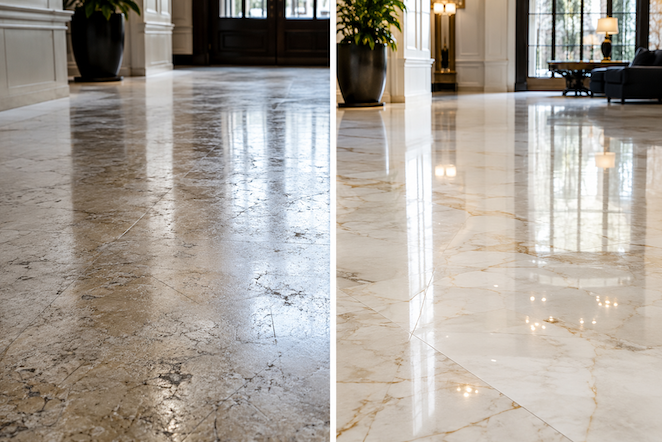
Many New York City properties feature natural stone flooring beyond marble and granite. Limestone, travertine, quartzite, slate, and other stone materials offer distinct textures, colors, and architectural appeal.
Each material requires an appropriate restoration approach based on its physical characteristics, finish, and condition.
Limestone Floor Restoration
Limestone is a calcium-based natural stone commonly used in elegant residential and commercial interiors. Like marble, it can be sensitive to acidic substances and certain abrasive cleaning methods.
Professional limestone cleaning helps remove accumulated dirt and residue using suitable techniques, while damaged surfaces may require further restoration.
Travertine Floor Restoration
Travertine is recognized for its natural texture and distinctive appearance. Over time, certain travertine floors may develop worn finishes, stains, damaged fills, or visible surface imperfections.
Professional travertine restoration may involve cleaning, honing, polishing, repairs, and other treatments appropriate for the stone.
Quartzite and Slate Floor Restoration
Quartzite and slate have different characteristics from marble and limestone. Their hardness, surface texture, and mineral composition influence which cleaning and restoration techniques are suitable.
Some quartzite floors may benefit from specialized polishing, while certain slate surfaces require cleaning and maintenance methods that preserve their natural texture.
For historic or architecturally significant stone surfaces, the National Park Service’s preservation guidance emphasizes evaluating existing materials and selecting appropriate, minimally damaging cleaning and restoration treatments.
6. Enhance the Appearance and Appeal of Your NYC Property
Well-maintained natural stone flooring contributes to the overall appearance of residential and commercial interiors.
Whether you own a Manhattan condominium, manage a Brooklyn apartment building, operate a luxury hotel, or maintain a corporate office, attractive floors can help create a positive first impression.
Scratched, stained, or visibly worn stone flooring may detract from the appearance of an otherwise carefully maintained property.
Professional restoration can improve the visual consistency of flooring and help preserve the premium appearance associated with natural stone.
Stone Floor Restoration for Residential Properties
In luxury homes and apartments, restored stone floors can enhance entryways, kitchens, bathrooms, hallways, and living spaces.
For homeowners considering selling or renting their property, attractive flooring may contribute to a more favorable presentation during property showings.
Stone Floor Restoration for Commercial Buildings
In hotels, office buildings, retail stores, and commercial properties, natural stone floors often experience continuous foot traffic.
Restoring worn surfaces can improve the appearance of reception areas, entrance lobbies, corridors, and other frequently used spaces.
Although restoration does not guarantee an increase in property value, preserving high-quality flooring can support the property’s overall presentation and maintenance standards.
7. Address Floor Damage and Support Safer Walking Surfaces
Damaged stone flooring may create safety concerns when cracks, loose tiles, uneven sections, or deteriorated joints produce walking hazards.
Professional assessment can help identify damaged areas that require repair or additional attention.
However, polishing does not automatically improve slip resistance. Some polished stone finishes may become slippery when wet, and different finishes and surface treatments can affect traction.
Any changes to a floor’s finish or slip resistance should be evaluated according to the property’s use and applicable safety requirements.
The Occupational Safety and Health Administration’s walking-working surface requirements emphasize maintaining workplace floors in a clean, orderly, and safe condition, including addressing recognized hazards and unsafe surface conditions.
Stone Flooring Issues That May Require Attention
- Loose or unstable stone tiles
- Raised edges and uneven transitions
- Damaged or deteriorated grout joints
- Cracks that create walking hazards
- Persistent moisture or slippery conditions
- Areas with severe surface deterioration
Some issues may require repair or replacement rather than cosmetic restoration alone.
For commercial properties, restoration specialists and building managers should coordinate suitable treatments and safe access during maintenance work.
8. Reduce Staining Risks With Appropriate Stone Sealing
Some natural stone floors benefit from sealing because certain materials can absorb liquids and develop stains.
Professional sealing may help reduce liquid absorption and make everyday cleaning easier when a compatible product is selected for the stone.
However, not every natural stone requires the same sealing treatment. The appropriate product and application schedule depend on the material’s absorbency, finish, location, and existing protection.
Professional marble sealing and related stone protection treatments can be valuable for certain floors exposed to spills and moisture.
Sealing does not make natural stone completely waterproof, scratch-proof, or resistant to every type of stain. It also does not prevent acid etching on calcium-based stone such as marble and limestone.
A professional evaluation can help determine whether additional protection is appropriate.
Why Professional Stone Floor Restoration Is Better Than Improper DIY Methods
Stone restoration requires an understanding of different materials, surface finishes, appropriate abrasives, and specialized equipment.
Using the wrong cleaning chemicals or polishing products may cause additional damage, including scratches, discoloration, residue buildup, and uneven finishes.
For example, acidic cleaners can etch marble and limestone, while aggressive polishing methods may create visible inconsistencies across a stone floor.
Professional restoration specialists evaluate the material before selecting the most appropriate treatment.
What to Expect During Professional Stone Floor Restoration
- Stone inspection and evaluation of existing damage
- Identification of the appropriate restoration methods
- Removal of dirt, residue, and surface contaminants
- Honing, polishing, or refinishing when necessary
- Repair of suitable minor surface imperfections
- Sealing when appropriate for the stone
- Final inspection and maintenance recommendations
The goal is to improve the stone’s appearance while preserving as much of the existing material as practical.
When Should You Schedule Stone Floor Restoration in NYC?
There is no universal schedule for restoring natural stone floors. The appropriate timing depends on the material, foot traffic, cleaning practices, and amount of visible wear.
Residential floors in lightly used areas may maintain their appearance for years with proper cleaning, while commercial entrance floors can experience much faster wear.
Signs that professional stone restoration may be needed include:
- Floors that remain dull after proper cleaning
- Visible scratches and worn traffic patterns
- Deep stains or discoloration
- Etching on marble or limestone surfaces
- Uneven or damaged finishes
- Minor chips and surface imperfections
- Persistent cleaning residue or buildup
Scheduling a professional assessment can help determine whether the floor needs cleaning, polishing, refinishing, repairs, or more extensive restoration.
Stone Floor Restoration for NYC Homes and Commercial Properties
Natural stone flooring is found throughout New York City, including Manhattan apartments, Brooklyn brownstones, Queens residences, luxury condominiums, hotels, and commercial office buildings.
These properties experience different maintenance challenges based on foot traffic, surface material, and daily use.
Residential stone floors may develop scratches from furniture movement, spills, and improper cleaning products. Commercial flooring often experiences additional wear from continuous pedestrian traffic, carts, equipment, and outdoor debris.
Professional restoration helps property owners address existing surface damage and develop suitable maintenance practices for their flooring.
For additional information on selecting a qualified restoration company, read our guide, Best Marble Restoration Services in New Jersey: What to Look For.
Choose Love Marble for Professional Stone Floor Restoration in NYC
Natural stone flooring is a valuable feature that deserves appropriate care. Whether your floors are made from marble, granite, limestone, travertine, or another stone material, professional assessment and restoration can help address wear and improve their appearance.
At Love Marble Stone & Restoration, we provide specialized natural stone cleaning, polishing, honing, refinishing, sealing, and restoration services for residential and commercial properties throughout New York City and New Jersey.
Our team evaluates the condition of existing stone surfaces and recommends suitable treatments based on the material, finish, and type of damage.
Whether you’re dealing with dull marble floors, worn granite, stained limestone, or damaged natural stone surfaces, professional restoration may help preserve your existing flooring without unnecessary replacement.
Contact Love Marble Stone & Restoration today to request a consultation and learn more about professional stone floor restoration services for your NYC home or commercial property.