


Marble Repair in NJ: How to Choose the Best Company
Marble is one of the most elegant natural stones used in homes and commercial properties throughout New Jersey. From beautiful marble flooring and kitchen countertops to bathroom vanities, staircases, and entryways, natural marble adds timeless character and sophistication to any space.
However, even carefully maintained marble can become scratched, chipped, cracked, stained, or dull over time. Everyday foot traffic, accidental impacts, acidic spills, and improper cleaning products can all affect the appearance of natural stone.
When these problems occur, professional marble repair in NJ can help restore the appearance of existing marble without automatically requiring expensive replacement.
Choosing the right marble repair company is essential because different types of damage require different restoration techniques. A chipped countertop edge, scratched marble floor, and etched bathroom vanity cannot always be treated using the same methods.
At Love Marble Stone & Restoration, we provide professional marble cleaning, polishing, refinishing, grinding, sealing, and restoration services throughout New Jersey and New York City.
In this guide, we’ll explain common marble problems, how professional repairs work, what to look for in a marble restoration company, and why choosing an experienced natural stone specialist matters.
Why Professional Marble Repair in NJ Matters
Marble is a natural stone composed primarily of calcium carbonate minerals. Although it can remain beautiful for many years with appropriate care, its composition makes it sensitive to acidic substances, while abrasive debris and impacts can cause scratches or chips.
Homeowners may notice dull areas on polished marble floors, cloudy marks on countertops, or damaged edges around sinks and vanities.
These problems can affect the appearance of marble, but they do not always mean the stone needs to be replaced.
Professional restoration specialists evaluate the material and determine whether the damage can be addressed through cleaning, honing, polishing, localized repairs, or other techniques.
For example, minor scratches may respond to honing and polishing, while certain chips can be repaired using stone-compatible materials.
The Natural Stone Institute’s natural stone care recommendations explain that deeper scratches and surface damage may require professional repair and refinishing.
When marble remains structurally sound, restoration can be an attractive alternative to removing and replacing the original stone.
Common Marble Damage That Can Be Professionally Repaired
Not all marble damage is the same. Understanding the type of problem affecting your stone can help you communicate with a restoration company and determine what services may be necessary.
1. Marble Chips and Cracked Edges
Marble countertops, staircases, floor tiles, and bathroom vanities can develop chips from dropped objects, accidental impacts, and everyday use.
Chipped edges are especially common around exposed corners and other vulnerable areas.
Professional technicians may use specialized repair compounds to fill certain chips and improve their appearance.
Color matching and finishing techniques can help repaired areas blend with the surrounding marble, although repairs may remain visible depending on the stone’s veining and the extent of the damage.
Cracks require additional evaluation because some are cosmetic, while others may indicate movement, inadequate support, or more serious damage.
2. Scratches and Surface Wear
Scratches are among the most common problems affecting marble floors and countertops.
Sand, dirt, grit, furniture movement, and abrasive cleaning materials can damage the stone’s finish.
Professional honing may reduce or remove suitable scratches by refining the marble’s surface with specialized abrasives.
For more information, read our guide on how to remove scratches from marble.
3. Acid Etching
Marble is sensitive to acidic substances such as lemon juice, vinegar, wine, and certain household cleaning products.
When acids react with the calcium carbonate in marble, they can create dull or cloudy marks known as etching.
Etching is different from staining because it involves a chemical change to the stone’s surface.
Professional marble refinishing may help remove or reduce etching through appropriate honing and polishing techniques.
4. Marble Stains and Discoloration
Some marble surfaces can absorb liquids, allowing oils, beverages, cosmetics, and other substances to cause staining.
Different stains require different treatment methods, and some may be difficult or impossible to remove completely.
The Natural Stone Institute’s stain removal guidance explains that identifying the source of a stain is an important step in selecting an appropriate treatment.
Professional marble cleaning and specialized stain treatments may improve certain types of discoloration without unnecessarily damaging the surface.
5. Dull Marble Floors and Countertops
Polished marble can gradually lose its reflectivity due to scratches, acidic etching, cleaning residue, and everyday wear.
Professional marble polishing can help restore the desired level of shine by refining the existing finish.
For surfaces with more extensive damage, honing or grinding may be necessary before polishing.
6. Uneven Marble Tiles and Flooring
Some marble floors develop noticeable differences in height between adjacent tiles, commonly referred to as lippage.
Depending on the condition of the flooring, professional marble grinding may help reduce suitable surface irregularities.
However, grinding does not resolve every installation problem. Loose tiles, unstable substrates, or continuing structural movement require separate investigation and repair.
The Professional Marble Repair and Restoration Process
Professional marble repair typically begins with an evaluation of the affected surface. The specific restoration steps depend on the type of damage, marble variety, existing finish, and desired results.
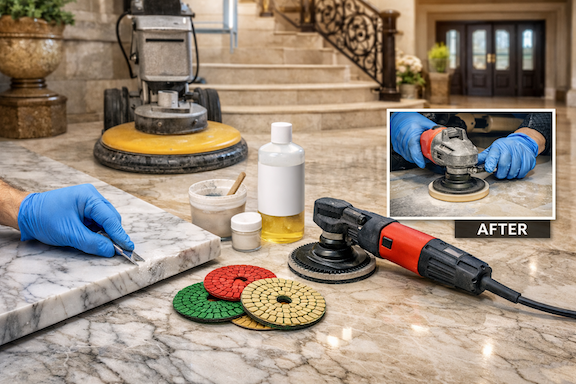
Step 1: Inspect the Marble Surface
A restoration specialist evaluates the existing damage and identifies whether the problem involves scratches, stains, etching, chips, cracks, or uneven surfaces.
The inspection also helps determine whether the stone is structurally sound and suitable for restoration.
Step 2: Clean and Prepare the Area
The marble is cleaned using products appropriate for natural stone.
Removing dirt, grease, and residue allows technicians to evaluate the surface more accurately and prepare it for the selected treatments.
Step 3: Complete Necessary Repairs
Minor chips and certain cracks may be repaired using compatible stone repair materials.
The repair method depends on the location, severity, and cause of the damage.
Color matching and finishing may help improve the appearance of repaired areas.
Step 4: Hone or Grind the Marble When Necessary
For scratches, etching, or suitable surface irregularities, specialized abrasives may be used to refine the stone.
Honing is commonly used for scratches and etched areas, while grinding may be appropriate for certain deeper damage or uneven finishes.
Not every marble repair project requires these treatments.
Step 5: Restore the Desired Finish
After necessary repairs and surface preparation, polishing may be performed to achieve the desired finish.
Some property owners prefer highly polished marble, while others choose honed or satin finishes.
The technique should be selected according to the stone’s existing condition and intended use.
Step 6: Evaluate Sealing Needs
Some marble surfaces benefit from compatible penetrating sealers that reduce liquid absorption and improve stain resistance.
Professional marble sealing may be appropriate depending on the stone’s absorbency, existing protection, and exposure.
However, sealing does not prevent scratches, acid etching, or every type of staining. It is not automatically necessary after every repair.
How to Choose the Best Marble Repair Company in NJ
When searching for marble repair services in New Jersey, choosing a qualified company is one of the most important decisions you can make.
Marble restoration requires specialized knowledge, appropriate equipment, and an understanding of how different stone finishes respond to treatment.
Look for Experience With Natural Stone
Choose a company with relevant experience repairing and restoring marble rather than relying exclusively on general cleaning or flooring contractors.
Ask whether the company has previously worked with the specific type of marble and damage affecting your property.
For example, repairing a chipped marble countertop requires different techniques from restoring scratched flooring in a commercial lobby.
Review Previous Marble Repair Projects
Before-and-after photographs can help demonstrate a company’s experience with marble repairs and restoration.
Look for examples involving similar stone surfaces and types of damage.
Photographs of polished marble flooring may not fully demonstrate a contractor’s ability to repair countertop chips or cracks.
Read Customer Reviews and Testimonials
Customer feedback can provide useful information about a company’s professionalism, communication, workmanship, and reliability.
When reviewing testimonials, look for specific details about completed marble repair projects.
Reviews mentioning accurate estimates, careful workmanship, and satisfactory communication may help when comparing providers.
Ask About Repair Techniques and Equipment
An experienced marble repair specialist should be able to explain the recommended restoration method and why it is appropriate.
Ask whether your marble needs localized repair, honing, polishing, grinding, or another treatment.
Be cautious of companies that recommend extensive grinding or complete replacement without evaluating the surface.
Look for Customized Repair Solutions
Every marble surface has unique characteristics.
The right treatment depends on the stone’s condition, finish, damage severity, and location.
A reliable contractor should recommend a repair plan tailored to the existing stone rather than applying the same process to every project.
Verify Insurance and Applicable Registration Requirements
Ask for appropriate proof of insurance and verify whether the proposed repair work falls under New Jersey’s home improvement contractor requirements.
The New Jersey Division of Consumer Affairs explains registration requirements for businesses performing covered residential home improvements, which can include certain repair and restoration activities.
Requirements depend on the scope of work and applicable exemptions, so homeowners should verify a contractor’s status when required.
Request a Detailed Written Estimate
A written estimate should explain the proposed treatments, expected results, scheduling considerations, and potential limitations.
Ask whether cleaning, polishing, repairs, sealing, and other services are included or quoted separately.
Comparing the scope of work is more useful than comparing prices alone.
Questions to Ask Before Hiring a Marble Repair Company
Before selecting a marble repair specialist, ask questions that help clarify the proposed work and establish realistic expectations.
- Have you repaired this type of marble before?
- Can you show examples of similar repairs?
- What caused the damage, and does the underlying problem need attention?
- Can the marble be repaired without replacement?
- Will the repaired area remain visible?
- Which cleaning or restoration techniques will you use?
- Does the surrounding finish need to be restored?
- Is sealing appropriate after the repair?
- What preparation or access is necessary?
- Can you provide an itemized written estimate?
- What maintenance do you recommend afterward?
A trustworthy contractor should communicate clearly and avoid guaranteeing that every crack, stain, or repair will become completely invisible.
Marble Repair vs. Marble Replacement: Which Is Better?
One reason homeowners consider professional marble repair is the possibility of preserving the existing stone rather than removing and replacing it.
When marble remains structurally sound, restoration may be a practical and economical option.
| Consideration | Marble Repair | Marble Replacement |
|---|---|---|
| Best For | Scratches, etching, certain chips and repairable cracks | Severe breakage, unstable stone, or irreparable damage |
| Existing Stone | Preserves the original material when suitable | Removes and replaces affected material |
| Project Scope | May involve localized repairs or refinishing | May require removal, fabrication, and installation |
| Appearance | Can improve existing stone, with results depending on damage | Introduces replacement stone that may vary in color and veining |
| Cost | May cost less for suitable cosmetic damage | Depends on material, removal, and installation requirements |
Some types of damage cannot be corrected through surface restoration alone.
If marble tiles are loose, the supporting substrate is unstable, or the stone has extensive structural cracks, additional corrective work or replacement may be necessary.
For more information, explore our guide, Marble Restoration vs. Replacement: When Is Each the Best Option?
What Does Marble Repair in NJ Cost?
The cost of marble repair in New Jersey depends on the nature of the damage, size of the affected area, accessibility, and repair methods required.
A small countertop chip repair involves different materials and labor than restoring a large marble floor with extensive scratches and etching.
Factors That Affect Marble Repair Pricing
- Type and severity of damage
- Size of the affected area
- Location of chips or cracks
- Stone characteristics and veining
- Need for color-matched repair materials
- Honing or polishing requirements
- Furniture movement and surface preparation
- Property accessibility
- Commercial scheduling requirements
Rather than relying on generic prices, request a quote based on the condition of your marble.
For flooring projects, our 2026 marble floor restoration cost guide explains additional factors affecting restoration pricing.
Residential Marble Repair Services in New Jersey
Residential marble is commonly found in kitchens, bathrooms, hallways, foyers, staircases, and living areas.
Homeowners may require professional repairs for countertop chips, scratched flooring, etched bathroom vanities, or damaged decorative features.
Marble Countertop Repair
Kitchen countertops are exposed to daily food preparation, dishes, cookware, and acidic substances.
Common concerns include chipped edges, stains, scratches, and etching.
Professional repair and refinishing may help improve the appearance of these surfaces without automatically replacing the entire countertop.
Marble Floor Repair
Marble flooring in entryways and hallways may develop scratches, dull traffic patterns, and damaged tile edges.
Professional polishing, honing, or localized repairs may help address these problems.
Bathroom Marble Repair
Bathroom vanities, marble walls, and shower surrounds may experience staining, cleaning residue, etching, and minor damage.
Professional evaluation can determine whether cleaning, refinishing, or repairs are appropriate.
Persistent moisture problems should also be investigated rather than treated solely as cosmetic defects.
Commercial Marble Repair and Restoration in NJ
Marble is frequently used in commercial buildings because of its elegant appearance and architectural character.
Hotel lobbies, office buildings, restaurants, apartment complexes, and retail properties may contain marble flooring, counters, and decorative stone features.
These surfaces often experience heavier foot traffic and more frequent cleaning than residential marble.
Commercial restoration may involve:
- Repairing chipped or damaged marble flooring
- Restoring scratched lobby floors
- Refinishing worn traffic areas
- Repairing suitable countertop or reception desk damage
- Removing accumulated cleaning residue
- Polishing existing marble to a consistent finish
- Developing appropriate maintenance recommendations
Property managers should discuss project scheduling, building access, and operational requirements with the restoration company.
How to Maintain Marble After Professional Repairs
Proper maintenance can help preserve the appearance of repaired marble and reduce unnecessary future damage.
Although restoration can improve scratches, etching, and other surface problems, marble remains susceptible to everyday wear.
Marble Maintenance Tips
- Clean with pH-neutral products formulated for natural stone.
- Avoid vinegar, lemon juice, and acidic household cleaners.
- Wipe spills promptly.
- Use coasters beneath beverages.
- Use cutting boards during food preparation.
- Place entrance mats near exterior doors.
- Dust mop marble floors to remove abrasive debris.
- Use protective pads beneath furniture.
- Avoid dragging heavy objects across marble flooring.
- Consult a professional when new damage appears.
Some marble surfaces may benefit from sealing, but resealing is not automatically necessary on a fixed annual schedule.
A professional can determine whether the existing stone requires additional stain protection.
Why New Jersey Homeowners Choose Love Marble Stone & Restoration
When your marble has developed scratches, chips, etching, staining, or dull finishes, choosing an experienced natural stone restoration company is important.
At Love Marble Stone & Restoration, we focus on preserving existing marble and natural stone surfaces through professional cleaning, polishing, grinding, honing, refinishing, sealing, and restoration.
Our services are tailored to the condition of the stone and the type of damage present.
Whether you need to improve the appearance of a damaged marble countertop, restore scratched floors, or address worn stone in a commercial entrance, professional evaluation can help identify suitable treatment options.
We serve residential and commercial properties throughout New Jersey and New York City, including communities in Union, Morris, Essex, Bergen, and surrounding counties.
For more guidance on selecting a qualified stone restoration provider, read our related article, Best Marble Restoration Services in New Jersey: What to Look For.
Frequently Asked Questions About Marble Repair in NJ
Can Cracked Marble Be Repaired?
Some marble cracks can be repaired using suitable stone repair techniques and materials.
However, the success of the repair depends on the crack’s severity, location, and cause. Structural damage may require additional work or replacement.
Can You Repair a Chip in a Marble Countertop?
Many minor countertop chips can be repaired with compatible fillers and finishing techniques.
The repair may become less noticeable, although results vary depending on the stone’s color and veining.
Can Scratches Be Removed From Marble Floors?
Many surface scratches can be reduced or removed through professional honing and polishing.
Deeper damage may require more extensive restoration.
Does Marble Repair Cost Less Than Replacement?
Repair may be more economical when the existing marble is structurally sound and the damage can be corrected without removing the material.
However, the comparison depends on the scope of repairs and the cost of replacement.
How Long Does Marble Repair Take?
The project duration depends on the type of repair, size of the affected area, surface preparation, and curing requirements of any repair materials.
A professional assessment provides the best basis for estimating the schedule.
Can Acid Etching Be Repaired?
Yes, many forms of marble etching can be reduced or removed through professional honing and polishing.
Cleaning or sealing alone generally will not correct etching.
Should Marble Be Sealed After Repair?
Sealing may be appropriate for certain marble surfaces, depending on their absorbency, existing protection, and use.
However, sealing is not required after every repair and does not prevent scratches or acid etching.
Schedule Professional Marble Repair in NJ With Love Marble
Scratched, chipped, stained, or dull marble does not automatically need to be replaced.
When the existing stone remains suitable for restoration, professional marble repair in NJ may help improve its appearance while preserving the original material.
Choosing an experienced restoration company allows homeowners and businesses to better understand the type of damage, recommended repair methods, and expected results.
At Love Marble Stone & Restoration, we provide professional marble cleaning, polishing, honing, grinding, refinishing, sealing, and restoration services throughout New Jersey and New York City.
Whether your marble floors need restoration, your kitchen countertops have developed chips or etching, or your bathroom marble requires professional attention, our team can assess the stone and recommend appropriate treatment options.
Contact Love Marble Stone & Restoration today to discuss your marble repair needs and request a consultation.
Podcast: Play in new window | Download